Proudly serving Mesa
Mold and Asbestos Remediation Mesa Az
- Itemized pricing, no guesswork
- Built for Mesa's soil and monsoon season
- Permit paperwork handled, not hidden
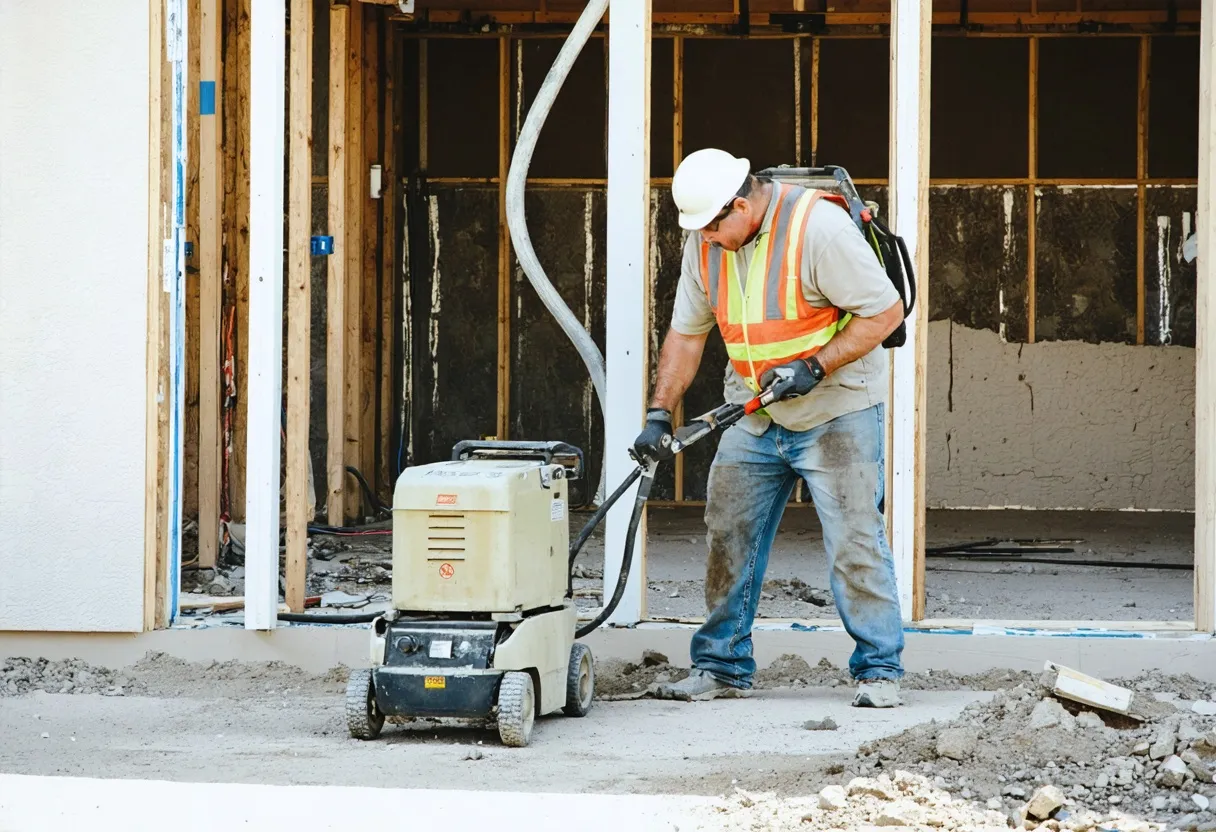
Mold and asbestos remediation in Mesa, AZ is not a job for guesswork, and it is definitely not a job for whoever answers the phone fastest with the lowest quote. Mesa's arid climate keeps outdoor mold spore counts lower than humid regions, but that same desert environment drives homeowners to run evaporative coolers, seal up homes tight against summer heat, and push HVAC systems hard for months at a time — all of which create the trapped moisture and condensation pockets where indoor mold actually takes hold. Layer in that a large share of the Valley's housing stock was built before the 1989 federal restrictions tightened on asbestos-containing materials, and you have two distinct hazards that often show up in the same renovation, water-damage claim, or pre-listing inspection. Our crews handle both, under one ROC-licensed roof, with the permit transparency and itemized pricing that most directory listings and one-truck operators simply don't offer.
This page walks through what mold and asbestos remediation actually involves in Mesa, how our process works from first call to final clearance, what drives the cost up or down, and how to vet a contractor before you sign anything. If you'd rather start with a broader look at who we are and the full range of construction and restoration work we do, visit our Mesa general contractor home page first.
01What Mold and Asbestos Remediation Covers
"Remediation" gets used loosely in this industry, so here is what it actually means when we say it.
Mold Inspection Mesa Homeowners Can Trust
Every job starts with an inspection, not a sales pitch. A proper mold inspection includes a visual assessment of visible growth, a moisture-mapping pass with a thermal or pin-probe meter on walls, subfloors, and ceiling cavities, and air-quality or surface sampling sent to a third-party lab when the source or extent isn't obvious. In Mesa, the usual culprits are:
- Condensation buildup around evaporative cooler ducting and attic penetrations
- Slow leaks under kitchen and bathroom cabinets that go unnoticed for months
- Roof or flashing leaks that let monsoon-season rain track down into insulation and drywall
- Irrigation or drainage water wicking up through slab foundations near exterior walls
- HVAC condensate lines that back up inside closets and utility rooms
The inspection report tells you exactly what you're dealing with, where it's spreading, and whether it's a contained cleanup or a larger remediation. We provide this assessment before any remediation contract is signed, so you're pricing an actual scope, not an estimate pulled from a windshield survey.
Mold Remediation Contractor Work: Containment, Removal, Clearance
As your mold remediation contractor, our job is to remove the mold and the moisture source that fed it, without spreading spores into the rest of the house. That means physical containment barriers with negative air pressure in the work zone, HEPA-filtered air scrubbers running throughout the job, removal of any porous material (drywall, insulation, carpet, framing) that mold has colonized past the point of cleaning, and antimicrobial treatment of salvageable structural surfaces. Once removal is done, we don't just call it finished — a licensed job includes post-remediation verification, either through our own clearance testing or an independent third-party inspector, confirming spore counts are back to normal background levels before we close containment and rebuild.
Asbestos Removal Mesa AZ: What Triggers It and How It's Handled
Asbestos removal comes up most often during renovation, demolition, or restoration work on homes built before the early 1990s. Common asbestos-containing materials in this era of Mesa construction include vermiculite attic insulation, popcorn ceiling texture, vinyl floor tile and the black mastic adhesive underneath it, HVAC duct wrap, and some older roofing felts and shingles. Asbestos isn't dangerous sitting undisturbed — the risk comes from cutting, sanding, or demolishing it and releasing fibers into the air. That's why any remodel, roof tear-off, or demolition on an older Mesa property should include an asbestos survey before crews start swinging hammers. If materials test positive, we handle abatement with sealed containment, negative-air equipment, licensed disposal at an approved facility, and air clearance testing before the space is released back for normal construction. We do not skip this step to keep a remodel on schedule, and we won't let a subcontractor skip it either.
02How the Remediation Process Works, Step by Step
- Initial call and triage. We ask what you're seeing or smelling, how long it's been present, and whether there's an active leak or recent water event. Active leaks get scheduled same-day.
- On-site inspection. Moisture mapping, visual assessment, and sampling if needed. You get a written scope, not a verbal guess.
- Written, itemized proposal. Line items for containment setup, material removal, disposal, antimicrobial treatment, and any rebuild work — so you can see exactly what you're paying for and why.
- Permitting, if required. Asbestos abatement and certain structural remediation work require permits and, in some cases, notification to Arizona regulatory agencies before work begins. We pull these and handle the paperwork rather than leaving you to figure out Mesa's permit process on your own.
- Containment and removal. Sealed work zones, negative air pressure, HEPA filtration, and removal of affected materials.
- Clearance testing. Verification that the space meets safe air-quality standards before containment comes down.
- Rebuild. Drywall, texture, flooring, cabinetry — whatever was removed gets put back by the same team, coordinated by one project manager from start to finish.
03Beyond Remediation: Restoration, Roofing, and Demolition
Mold and asbestos jobs rarely exist in isolation. They usually trace back to water intrusion, storm damage, or a renovation that opened up an old wall. Because we're a full general contracting operation and not a single-trade remediation crew, we handle the whole chain of causes and effects under one contract:
- Roofing inspection, repair, and replacement — monsoon storms and UV-baked shingles are the most common source of the leaks that lead to attic and ceiling mold. We inspect roofs as part of many remediation jobs to make sure we're fixing the source, not just the symptom.
- Fire and water damage restoration — structural drying, smoke and soot cleanup, and content restoration after a fire or burst pipe, with mold prevention built into the drying protocol from day one.
- Demolition services — selective interior demo for a remodel, or full structural teardown, always preceded by an asbestos and hazardous-material check on anything built before the 1990s.
Handling all of this in-house means one crew understands the whole job, instead of a remediation company, a roofer, and a restoration company each blaming the other for what got missed.
0424/7 Emergency Response and Free Inspections
Water intrusion and storm damage don't wait for business hours. We offer 24/7 emergency response for active leaks, storm damage, and fire or water events, because mold growth can start within 24 to 48 hours of a moisture event — the faster the source is stopped and the area is dried, the smaller and cheaper the remediation. For non-emergency situations, we provide free inspections with same-day response in most cases, so you can get a real answer about what you're dealing with before you spend a dollar on cleanup.
05ROC Licensing, Insurance, and Permit Transparency
Arizona requires contractors performing this type of remediation, abatement, and structural repair work to hold an active Registrar of Contractors (ROC) license, and to carry liability insurance. This matters more than most homeowners realize: unlicensed "mold removal" operators can spray bleach on drywall and call it done, with no accountability if the mold comes back or if asbestos-containing material was disturbed without proper containment. We operate as a licensed, insured ROC contractor and are glad to walk you through our license status and coverage directly — you can also review general guidance on verifying a contractor's standing on our Mesa licensing and insurance page.
Permit transparency is part of the same issue. Some remediation and nearly all abatement work triggers permit or notification requirements. A contractor who tells you "we don't need a permit for that" to save time is usually wrong, and it's your name on the property record if it comes up during a future sale or inspection. We pull required permits as a standard part of the process and explain, in plain language, when a permit applies and when it doesn't.
06Single Point of Contact, From Inspection to Final Clearance
One of the most common complaints homeowners have about remediation and restoration work is coordination breakdown — the inspector, the remediation crew, the rebuild contractor, and the insurance adjuster all seem to be working from different information. We assign one project manager to every job who stays with it from the first inspection through final clearance testing and rebuild, and who is your single point of contact for scheduling, questions, and insurance documentation.
07Transparent, Itemized Pricing for Mesa Jobs
Most local listings mention "transparent pricing" without showing any actual numbers or line items. We take the opposite approach: every proposal breaks out containment setup, material removal and disposal, air scrubber and equipment rental days, antimicrobial or encapsulation treatment, testing and clearance fees, and rebuild costs as separate line items. You see what each part of the job costs, not a single lump number you have to trust blindly.
What Drives Cost Up or Down
- Size and location of the affected area. A small bathroom cabinet leak costs far less than mold that has spread through wall cavities across multiple rooms.
- Whether asbestos-containing material is involved. Abatement requires specialized containment, licensed disposal, and clearance testing that standard mold remediation doesn't.
- Source of the moisture. If a roof leak, plumbing failure, or grading issue caused the mold, fixing the source adds to the scope but prevents a repeat job in a year.
- Rebuild scope. Replacing drywall, insulation, flooring, or cabinetry after removal is priced separately from the remediation itself.
- Testing and clearance requirements. Third-party lab sampling and post-remediation verification add cost but protect you if the property is ever sold or disputed with an insurer.
We also mention financing options for larger remediation-and-rebuild projects during the proposal stage, since a combined mold, roof, and interior rebuild job can be a significant expense that many homeowners prefer to spread out rather than pay in one lump sum.
08Why Choose a Local Mesa General Contractor
Mesa's building conditions are specific enough that out-of-town or directory-only operators frequently get the underlying cause wrong. Desert soils shift and settle differently than the soils most national remediation franchises are trained around, monsoon season delivers concentrated, wind-driven rain that finds gaps in flashing and stucco that a dry-climate inspector might not think to check, and evaporative cooling systems (still common on older Mesa homes) create condensation patterns that HVAC-only technicians from wetter climates don't always recognize. A contractor who works Mesa roofs, slabs, and remodels every week catches these patterns faster and prices the fix more accurately than someone reading from a national playbook. We also serve the surrounding East Valley, including Queen Creek, Gilbert, Chandler, and Scottsdale, so we see how these same desert-climate issues play out across a range of home ages and construction styles.
09Common Mistakes Homeowners Make
- Painting over visible mold instead of removing it. Paint hides the surface but does nothing to the mold or the moisture source underneath.
- Skipping the asbestos check before a remodel. Cutting into popcorn ceiling texture or old vinyl tile without testing first can spread fibers throughout the HVAC system.
- Hiring on price alone. A remediation quote thousands of dollars below everyone else's is usually missing containment, testing, or proper disposal — not a better deal.
- Fixing the mold but not the moisture source. If the leak or condensation issue isn't corrected, the mold comes back within a season.
- Not getting clearance testing. Without documented proof the space tested clean, you have no record for a future buyer, inspector, or insurer.
10Beyond Remediation: Full-Service General Contracting
Remediation and rebuild work is often the entry point to a larger project. Many of our remediation clients end up expanding the scope once walls are already open, and we handle that continuity in-house:
- Home additions for growing families who need more square footage rather than starting over
- Kitchen and bathroom remodeling, often paired with remediation when cabinet or subfloor leaks are the mold source
- ADU, casita, and guest house construction for multigenerational living or rental income
- Custom home construction for buyers who'd rather build to their own spec than remodel an older property
Because the same ROC-licensed team handles remediation, restoration, and construction, there's no handoff between separate companies who don't talk to each other. We maintain a portfolio of completed Mesa-area projects and client references available on request, so you can see the quality of finish work before committing to a rebuild scope.
11Frequently Asked Questions
How do I know if it's mold or just a stain?
Surface staining from old water damage can look similar to mold at a glance. The reliable way to tell is a moisture reading and, if there's any doubt, a surface swab sample sent to an independent lab. We include this check as part of every inspection rather than guessing from a photo.
Do I need to leave my house during mold remediation?
It depends on the size and location of the affected area. Small, contained jobs (a single bathroom or closet) usually don't require you to vacate. Larger jobs involving HVAC systems, multiple rooms, or asbestos abatement often do require temporary relocation for safety during active containment work. We'll tell you upfront which category your job falls into.
Is asbestos testing required before every remodel in Mesa?
It's not legally required for every project, but it's strongly recommended for any home built before the early 1990s where you're disturbing ceiling texture, floor tile, insulation, or duct wrap. Skipping this test on an older home is one of the most common and most costly mistakes we see homeowners make mid-remodel.
How long does mold remediation typically take?
A small, contained job can be finished in one to three days. Larger jobs involving structural removal, HVAC decontamination, or asbestos abatement can run one to two weeks once testing, containment, removal, clearance, and rebuild are all factored in. We give you a job-specific timeline in the written proposal, not a generic range.
Will my homeowner's insurance cover this?
Coverage depends on the cause. Mold resulting from a sudden covered event, like a burst pipe, is often covered; mold from long-term neglect or a pre-existing leak typically isn't. We document the source and provide the reporting your insurance adjuster needs, but the coverage decision itself comes from your policy and carrier.
What happens if testing finds asbestos after work has already started?
Work stops immediately in the affected area, containment goes up, and we bring in licensed abatement procedures before continuing. This is exactly why we test before starting on older homes — finding it mid-demolition costs more time and money than catching it during the inspection phase.
Get an Itemized Quote
No pressure, no vague estimates — just a clear breakdown for your Mesa project.
More general contractor services
Ready to See an Itemized Quote?
Get a clear breakdown of costs and permit steps before you decide anything.