Proudly serving Mesa
Demolition Contractor Mesa Az
- Itemized pricing, no guesswork
- Built for Mesa's soil and monsoon season
- Permit paperwork handled, not hidden
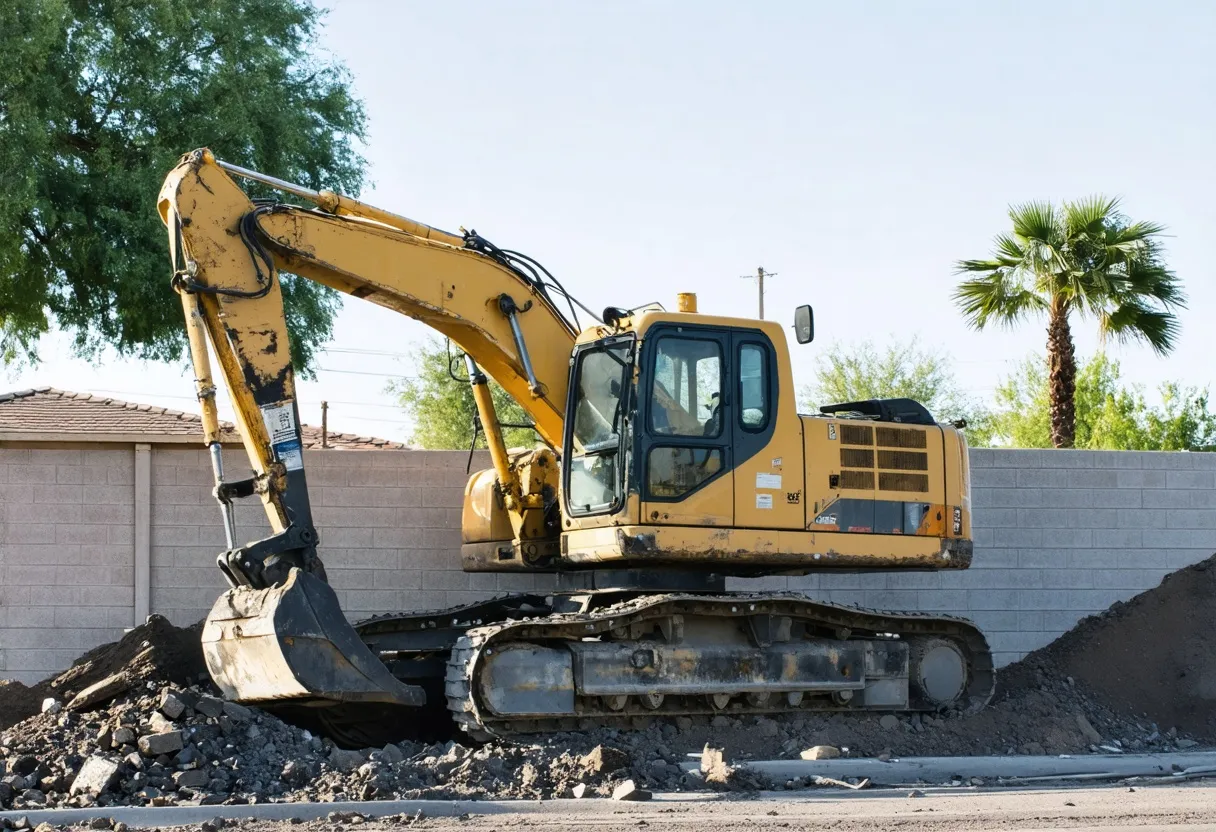
Most demolition bids in Mesa are written for concrete on a truck, not for what's actually under a Mesa lot. Caliche hardpan east of Power Road, expansive clay pockets that shift after a wet monsoon, and a Building Safety Division that will hold your next permit hostage over an unpermitted teardown are not edge cases here — they're the baseline. A demolition contractor working in Mesa, AZ has to plan for all three before the first wall comes down, not discover them mid-job when the excavator stalls or the inspector red-tags the site.
We're an ROC-licensed, insured general contractor on E Southern Ave in Mesa, and demolition is usually where our projects begin — an interior gut ahead of a remodel, a full structure demolition permit for a teardown-rebuild, or straightforward site clearing to get a lot buildable again. Every scope gets an itemized quote broken down by task, not a single number pulled from a guess, and every permit step gets explained before we file it, not after you've already paid for a surprise. This page walks through what that actually looks like on a Mesa job — the ground, the paperwork, the price drivers, and the questions worth asking before anyone signs a contract.
01Signs Your Teardown Is a Permitted Job, Not a Weekend Dumpster Project
02Why Mesa's Ground Changes the Demolition Plan
A demolition estimate that doesn't account for what's under the surface is a bid that's going to change once equipment is on site. Caliche — a cemented layer of calcium carbonate that forms in arid soils — sits at varying depths across Mesa and can be dense enough that standard excavation attachments struggle with it. We test and account for caliche depth before quoting site clearing work, because a crew that hits an unexpected caliche layer mid-job either stalls the schedule or reaches for equipment that wasn't priced into the original bid.
Expansive clay and foundation risk
Pockets of expansive clay across the valley swell when they absorb moisture and contract as they dry, which is exactly what happens across a monsoon season followed by months of drought. On a demolition tied to a rebuild, grading and soil correction during the demo phase matter more than they'd seem to — get it wrong here and the foundation problems show up years later, long after the demolition crew is gone.
Monsoon timing and dust control
Roughly June through September, wind-driven dust and sudden downpours are part of the working conditions, not an exception to them. Open excavation during a heavy monsoon cell can create standing water and erosion that complicates the next phase of construction, and a haboob rolling through mid-teardown can carry dust well past a property line if site fencing and dust control weren't planned for the season. We factor monsoon timing into scheduling rather than treating it as a delay that catches the project off guard.
03What Happens Between Your Call and the First Wall Coming Down
We walk the property, note the structure's age and likely hazardous materials, and identify whether utilities were ever run to it.
If the structure's age warrants it, we schedule asbestos testing and prepare the demolition permit application along with utility disconnect requests.
We submit to the Building Safety Division and track the review, so you're not the one calling the city to check status.
No demolition starts until electric, gas, water, and sewer capping is verified and documented — Mesa treats this as an inspection requirement, not paperwork you can skip.
Material is sorted for recycling versus disposal, the site is graded, and the permit is closed with the city so no open history is left attached to the address.
04What Actually Drives the Price on a Mesa Demolition
We give itemized pricing instead of one lump figure because the cost drivers on a Mesa demolition are specific enough that bundling them hides where the money is going. The scope and type of structure matters first — a detached garage or carport comes down differently than a full single-family home, and interior-only demolition (walls, cabinetry, flooring) carries a different cost profile than structural work.
From there, hazardous material testing on older structures, utility disconnect fees billed by the respective utility, and debris volume all factor in — concrete and metal typically get sorted for recycling, which can offset some disposal cost versus a straight landfill haul. Soil and site conditions are where Mesa bids diverge most from a generic estimate: caliche and expansive clay can require different excavation equipment than a standard job, and that has to be priced up front rather than added as a change order once the crew hits it. Access constraints — tight side yards, shared walls, limited equipment clearance in older Mesa neighborhoods — add labor time too. Permit fees are set by the city based on project valuation and structure size, and timing during monsoon season can affect scheduling and dust-control requirements. None of these should be a surprise on a final invoice if the original quote was itemized honestly.
05Demolition Questions Mesa Property Owners Ask Before They Sign
Do I need a permit to tear down a shed or carport in Mesa?
In most cases yes — the city requires a demolition permit above a certain structure size, and utility disconnect verification applies regardless of size if any service was ever run to it. We confirm this during the inspection before recommending a scope.
How long does asbestos testing add to the timeline?
It depends on the structure's age and how quickly a survey can be scheduled and cleared, since certain permit applications can't move forward until that clearance is in hand. We build the testing step into the schedule up front instead of treating it as a delay.
Is interior demolition permitted differently than a full teardown?
Often, yes — interior demo that doesn't touch load-bearing walls or building systems can fall under a different permit category than a full structure demolition. We confirm the correct classification with the city before filing so the job isn't over- or under-permitted.
What happens to the debris once demolition is done?
Concrete and metal are typically separated for recycling where possible, and the rest goes to an approved disposal facility. You receive documentation of disposal, which matters if the lot is later sold or redeveloped.
Can the same contractor handle site clearing and the new construction after?
Yes — clearing a lot, correcting for caliche or expansive soil, and grading for a foundation are typically the first phase of a larger build, and running them as one continuous scope avoids a handoff gap between separate contractors.
06Every Permit Step Explained Before We File It
We're licensed through the Arizona Registrar of Contractors and carry general liability and workers' comp coverage on every demolition project. Before anything comes down, you'll know exactly what the City of Mesa requires for your specific structure — not a generic checklist applied after the fact.
07Serving Mesa's Demolition and Site Clearing Needs Across the East Valley
We're based on E Southern Ave in Mesa, 85209, which puts us close to the properties east of Power Road where caliche and expansive clay come up most often in site clearing bids. From there we run demolition, interior gut, and site prep projects throughout the surrounding East Valley — Gilbert, Chandler, Queen Creek, and Scottsdale share enough of the same soil and permitting conditions that working across all of them keeps us dealing with the same subsurface and code realities repeatedly, rather than encountering caliche or a Mesa-specific permit requirement for the first time on your lot.
That local repetition shows up in how a job actually runs: one point of contact carries the project from the initial inspection through permit close-out, so you're not re-explaining the scope to a different crew lead each week, and a same-day inspection is usually available when a damaged structure or a stalled sale has a real deadline attached to it. If a teardown, an interior gut ahead of a remodel, or a lot that needs clearing before new construction is on your list, start with an inspection and get a plan built around what's actually under your specific piece of Mesa — not a generic regional estimate.
Get an Itemized Quote
No pressure, no vague estimates — just a clear breakdown for your Mesa project.
More general contractor services
Ready to See an Itemized Quote?
Get a clear breakdown of costs and permit steps before you decide anything.